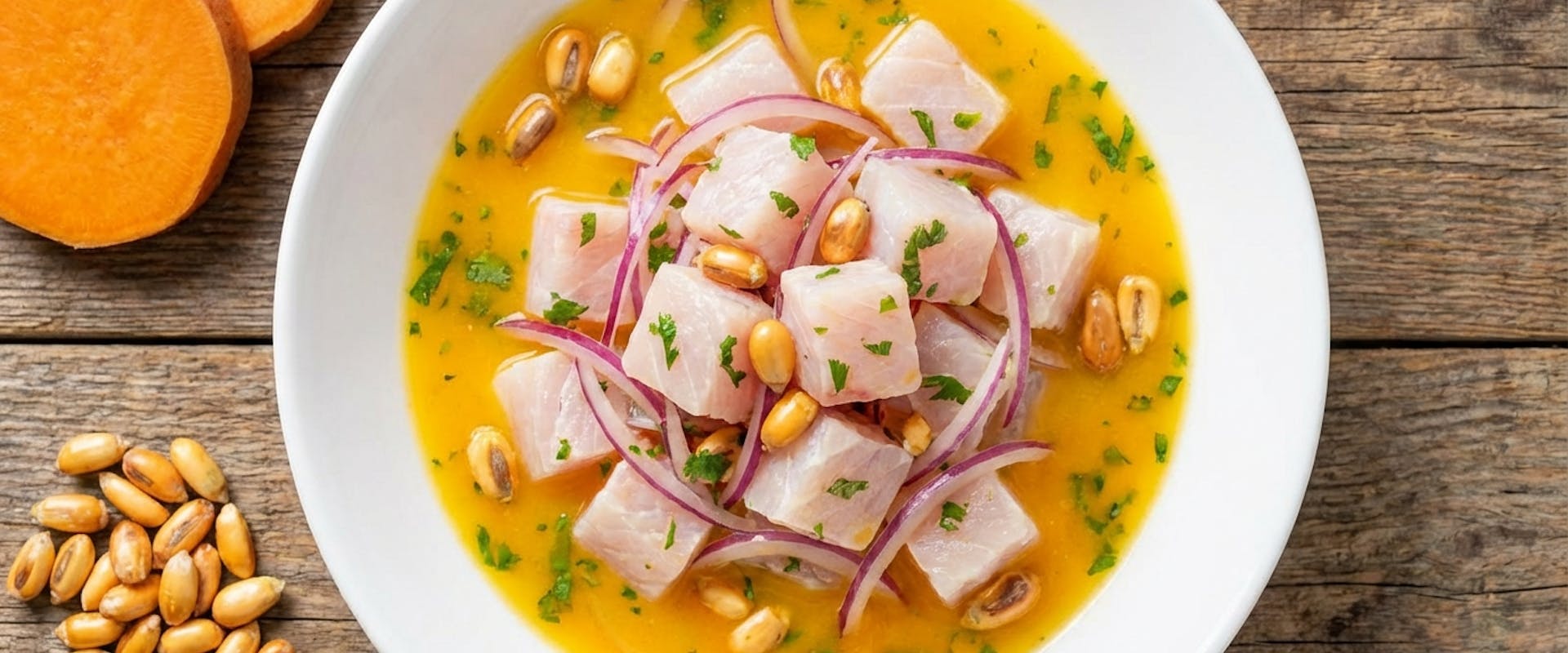

Authentic Peruvian Ceviche: Lima's National Dish and the Art of the Tiger's Milk
The fish arrives at the cevichería at 5 AM, still rigid from the Pacific's cold waters. By noon, it will be transformed into Peru's most celebrated dish—raw fish "cooked" in citrus juice, layered with red onion, ají limo, and the mysterious leche de tigre that gives ceviche its soul.
The Soul of Peruvian Ceviche
Ceviche isn't just Peru's national dish—it's a national obsession with its own holiday (June 28th). While variations exist throughout Latin America, Peruvian ceviche stands apart through its technique, particularly the brief marination and the magical leche de tigre.
In Lima's La Mar cevichería, I watched maestro Javier prepare ceviche with the precision of a surgeon. "The fish must be so fresh it's still firm," he explained. "We marinate for only five minutes—any longer and you're hiding poor quality with acid."
Understanding Leche de Tigre: The Tiger's Milk
Leche de tigre (tiger's milk) is the citrus-based marinade that "cooks" the fish through acid denaturation. But it's far more complex than lime juice alone.
The Classic Leche de Tigre Formula
Base ingredients:
- Fresh lime juice (Key limes or Persian limes)
- Fish trimmings (bones, skin, small pieces)
- Ají limo or rocoto (Peruvian hot peppers)
- Garlic, ginger, and cilantro
- Ice to keep everything cold during blending
- Salt and white pepper
The technique:
Blend fish trimmings with lime juice, peppers, garlic, ginger, and ice until completely smooth. Strain through a fine mesh to remove all solids. The result should be opaque, slightly thick, and taste of pure umami with bright citrus and gentle heat.
"The fish pieces in the marinade are essential," Javier insisted. "They give body and flavor that lime juice alone cannot achieve. This is why ceviche made without leche de tigre tastes flat."
Fish Selection: The Foundation of Great Ceviche
In Peru, lenguado (sole) and corvina (sea bass) reign supreme. Outside Peru, choose the freshest firm white fish available.
What to look for:
Fish quality indicators:
- Clear, bright eyes (if buying whole)
- Firm flesh that springs back when pressed
- Clean ocean smell, never fishy or ammonia-like
- Translucent flesh, not opaque or dull
- Purchase the day you plan to serve
Best fish varieties for ceviche:
- Sea bass (corvina in Peru)
- Halibut
- Fluke or flounder
- Snapper
- Mahi-mahi
- Striped bass
Fish to avoid:
- Tuna (too rich, overwhelms the marinade)
- Salmon (too oily for traditional ceviche)
- Tilapia (too soft, becomes mushy)
- Previously frozen fish (texture suffers)
The Classic Peruvian Ceviche Recipe
This recipe serves 4 as an appetizer, following Lima cevichería standards.
Ingredients
For the leche de tigre:
- Juice of 10-12 fresh limes (about 1 cup)
- 100g fish trimmings (bones, skin, small pieces)
- 1 ají limo or 1 small habanero (seeds removed for less heat)
- 2 cloves garlic
- 1-inch piece fresh ginger
- 1/4 cup fresh cilantro stems
- 1/2 cup ice
- Salt to taste
For the ceviche:
- 500g ultra-fresh white fish (sea bass or halibut), cut into 2cm cubes
- 1 large red onion, sliced paper-thin
- 1 ají limo, sliced (optional, for heat)
- Fresh cilantro leaves
- Salt and freshly ground white pepper
For serving:
- Cancha (toasted corn kernels)
- Sweet potato, boiled and sliced
- Choclo (large kernel Peruvian corn), boiled
- Lettuce leaves (optional)
The Method: Timing Is Everything
Step 1: Prepare the leche de tigre (can be done 2 hours ahead)
Combine fish trimmings, lime juice, pepper, garlic, ginger, cilantro stems, and ice in a blender. Blend on high for 2-3 minutes until completely smooth and frothy. Strain through a fine-mesh sieve, pressing to extract all liquid. Refrigerate until needed. The mixture should be very cold.
Step 2: Prepare your fish and vegetables
Cut fish into uniform 2cm cubes—any larger and the marinade won't penetrate properly. Slice red onion paper-thin using a mandoline or very sharp knife. Rinse onion slices in cold water and drain well to reduce sharpness.
Step 3: The critical 5-minute marination
Place fish cubes in a large bowl. Season lightly with salt and white pepper. Pour the ice-cold leche de tigre over the fish, ensuring all pieces are submerged. Add the sliced red onion and cilantro. Gently toss to combine.
Marinate for exactly 5 minutes. During this time, the fish will turn from translucent to opaque as the acid "cooks" the exterior while leaving the interior tender and nearly raw.
Step 4: Plate immediately
Ceviche waits for no one. Using a slotted spoon, divide the fish among chilled bowls. Pour some leche de tigre over each serving—not too much, just enough to keep it moist. Garnish with fresh cilantro, sliced ají limo if using, and a sprinkle of cancha.
Serve with sweet potato slices and boiled choclo on the side.
Regional Variations Across Peru
Ceviche Mixto (Mixed Seafood)
Combines fish with octopus, shrimp, and squid. Each seafood is marinated separately for different times based on texture.
Ceviche de Conchas Negras (Black Scallops)
From Northern Peru, using black scallops that turn the leche de tigre a dramatic dark color. Considered the most luxurious ceviche variety.
Ceviche Nikkei
A Japanese-Peruvian fusion using soy sauce, sesame oil, and ají amarillo. Born from Peru's significant Japanese immigrant population.
Tiradito
Sashimi-style sliced fish with a spicier, more liquid leche de tigre. The fish is sliced paper-thin rather than cubed, and the presentation is more refined.
Best Cevicherías in Lima
La Mar
The legendary cevichería founded by Gastón Acurio. Their ceviche clásico sets the standard, served in generous portions with perfectly balanced leche de tigre.
Pescados Capitales
Known for creative ceviches and the freshest catch. Their ceviche del día changes based on what arrives from the port.
Chez Wong
The hardest reservation in Lima—a hidden gem run by Chef Javier Wong in his home. Only serves lunch, no menu, just whatever the chef prepares that day.
El Mercado
Rafael Osterling's more casual concept focusing on the freshest market ingredients. Their ceviche showcases pristine fish with minimal intervention.
The Science Behind the Five-Minute Rule
The brief marination isn't tradition—it's chemistry. Citric acid denatures the proteins on the fish's surface, turning it opaque and firm. This happens quickly—within 2-3 minutes for thin pieces.
Marinate longer than 10 minutes, and the acid penetrates too deeply, making the fish mushy and "overcooked." The goal is a contrast: a barely cooked exterior giving way to a tender, almost raw center.
This is why Peruvian ceviche differs from Mexican or Ecuadorian versions, where fish marinates for hours. The Peruvian method demands absolutely pristine fish because there's nowhere to hide imperfections.
Common Ceviche Mistakes
Mistake #1: Over-marinating Solution: Set a timer for 5 minutes and serve immediately.
Mistake #2: Using old fish Solution: Make friends with your fishmonger. Ask what arrived that morning.
Mistake #3: Cutting fish too small Solution: Keep cubes at 2cm. Smaller pieces turn to mush.
Mistake #4: Bottled lime juice Solution: Only fresh-squeezed limes work. The flavor difference is massive.
Mistake #5: Warm ingredients Solution: Everything must be ice-cold—fish, leche de tigre, serving bowls.
Serving Ceviche: The Complete Experience
Ceviche is traditionally a lunch dish in Peru, served between 12-3 PM when fish is at its peak freshness. It's rarely eaten for dinner—by evening, the morning's catch is no longer prime.
Serve in chilled bowls. The contrast between cold ceviche and warm sweet potato is essential. The cancha provides textural crunch. The choclo offers sweetness that balances the acid.
Beverage pairings:
- Chicha morada: Purple corn drink, traditional and perfect
- Pisco Sour: Peru's national cocktail, its citrus notes complement the ceviche
- Cusqueña beer: Light lager that doesn't compete with delicate flavors
- Crisp white wine: Sauvignon Blanc or Albariño
Making Ceviche at Home: The Essential Steps
Ceviche is one of the few restaurant dishes that actually works better at home—you control every variable and can serve it at its absolute peak.
Morning of serving:
- Visit the fish market early
- Select the freshest fish available
- Ask for trimmings (most fishmongers give them free)
- Keep everything ice-cold on the journey home
2 hours before serving:
- Make leche de tigre
- Prep all vegetables
- Cut fish and refrigerate
- Chill serving bowls
5 minutes before serving:
- Combine fish with leche de tigre
- Add onions and cilantro
- Marinate exactly 5 minutes
- Plate and serve immediately
The Cultural Significance of Ceviche
Ceviche is more than food in Peru—it's cultural identity. The dish appears in pre-Columbian pottery, suggesting indigenous origins. Spanish colonizers added citrus. Japanese immigrants influenced presentation. Today's ceviche represents Peru's entire culinary history in a single bowl.
"When you eat ceviche, you taste the ocean, the lime groves, the Andes where the peppers grow, and centuries of cultural exchange," explained Javier as he prepared my final ceviche of the trip. "This is why we take it so seriously."
Bringing Lima Home
The best ceviche I ate wasn't at La Mar or Chez Wong. It was at a tiny cevichería in Miraflores with no name, just a hand-painted sign saying "Ceviche Fresco." The owner, a woman in her seventies, had been making ceviche the same way for fifty years.
She didn't measure anything. The leche de tigre was made by feel. The fish was whatever looked best at the market that morning. But every element was perfect—the balance, the temperature, the timing.
"The secret isn't a recipe," she told me. "It's respect. Respect for the fish, respect for the tradition, respect for the people you're feeding."
That's what ceviche teaches: that the simplest dishes demand the most care. That freshness cannot be faked. That some things—like the perfect five-minute window when fish is neither raw nor cooked but something transcendent—cannot be rushed.
Make ceviche when you find fish that makes you excited. Invite people you care about. Serve it immediately, while it's still cold and perfect. And for those five minutes of eating, you'll taste what Peruvians have known for centuries: that raw fish, citrus, and salt can create something unforgettable.